
The 5 Questions I Want Answered Before I Meet Your Child
Jun 02, 2026
Great sessions don't start when the child walks in. They start long before that.
I have a confession to make.
Before your child walks into one of our sessions, I am already thinking about them. Not about what activities we will do. Not about which goals we will measure. I am thinking about who they are.
What lights them up. What shuts them down. What they are hoping this experience will feel like, even if they cannot articulate that yet. What you, as their parent, are hoping for on their behalf.
Because the truth is, the most important part of a great paediatric session happens before the child arrives. It happens in the questions we ask. The information we gather. The picture we build of a whole child, not just a set of goals or a list of deficits.
In sixteen years of working with children, I have learned that the sessions that go best are almost never the ones where I had the best plan. They are the ones where I had the best understanding. Of who I was about to meet, what they needed to feel safe, and where we could genuinely begin.
These are the five questions I ask before I meet any child. I want to share them with you, and explain why each one matters far more than it might first appear.
Why we ask before we assess
Most clinical processes begin with assessment. With measurement. With a formal process that positions the child as the subject of observation and the clinician as the expert.
We do things differently.
We begin with conversation. With questions that put parents in the role they actually deserve, which is expert on their own child. Because you have been watching your child every single day. You have seen the patterns. You know the things that work and the things that reliably fall apart. You know what their regulated state looks like and what the early warning signs of a hard moment are.
That knowledge is not anecdotal. It is clinical gold. And before we meet your child, we want all of it.
The five questions below are the foundation of that conversation. They tell us far more than any standardised assessment can, because they tell us about the whole child, in the real environments where their life actually happens.
QUESTION 1
What does your child love?
Not what they are good at. Not what they have achieved or what milestones they have reached. What do they love?
This is always the first question, and it is always the most important one.
Because a child's love is a clinical tool. It is the entry point for engagement. It is the thing that gets a reluctant child off the sidelines. It is the hook that makes a difficult task feel worthwhile. It is the bridge between the session we have planned and the session that actually happens.
What it looks like in practice
If a child loves dinosaurs, we find a way to make dinosaurs relevant. If they love Minecraft, we talk about building and strategy and how the body is like a system with different parts that need to work together. If they love swimming, we talk about how the strength we are building in this session will make them faster in the water.
This is not pandering. It is engagement science. The brain learns better when it is connected to something it already cares about. And a child who walks into a session knowing that the adult in the room has taken the time to understand what matters to them arrives with a fundamentally different nervous system state than a child who walks into an unknown environment with an unknown adult and an unknown agenda.
There is something else too. A child who has been struggling, who has collected a history of things they find hard, often needs to be reminded that they are a full person with strengths and passions and things that come easily. Asking what they love is not a warm-up question. It is a statement about how we see them.
We are not looking for what your child is good at. We are looking for what makes them light up. That is where we begin.
So tell us everything. The current obsession. The game they play for hours. The topic they will talk about until you beg them to stop. The more specific, the better. That detail is not irrelevant background. It is the foundation of the first session.
QUESTION 2
What are your goals for coming?
This question sounds simple. It is not.
Because there are always at least two answers. There is the presenting goal, the one on the referral or the one that prompted you to reach out. And then there is the deeper goal, the one underneath, the one that is harder to say out loud.
The presenting goal might be: my child needs to improve their gross motor coordination.
The deeper goal is almost always something more like: I want my child to feel capable. I want them to be able to join in at the playground without feeling left behind. I want them to have one place where they feel good at something. I want to understand what is actually going on.
Why both matter
We need both answers because they point in different directions. The presenting goal tells us what to measure. The deeper goal tells us what success actually looks like for this family. And those two things are not always the same.
A child might show measurable improvement in coordination scores while still feeling like they are bad at sport. A child might hit every motor milestone while continuing to avoid physical activity because they associate it with embarrassment. If we only track the clinical measurement and miss the deeper goal, we have technically succeeded and practically failed.
We also ask this question because your goals matter as much as your child's. You have been navigating this journey for longer than we have. You have tried things. Some have worked, most have not, and some have been actively unhelpful. Knowing what you have already been through, what you are hoping for, and what would genuinely make a difference to daily life shapes everything about how we approach the work.
The goal on the referral tells us where to start. The goal underneath tells us what we are really working toward.
There are no wrong answers to this question. If you just want someone to help you understand what is going on, that is a completely valid goal. If you want practical strategies for home, we want to know that. If your goal is that your child gets through a school sports day without dreading it for three weeks beforehand, that is a real goal and it deserves a real plan.
Say all of it. We are listening.
QUESTION 3
What are your child's sensory preferences?
This is the question that changes the most about how we set up a session before the child arrives.
Every child has a sensory profile. A unique way that their nervous system processes the information coming in from the environment. Some children are sensory seeking, they want more input, more movement, more pressure, more noise. Some children are sensory avoiding, they find certain textures, sounds, or environments overwhelming. Many children are both, seeking in some areas and avoiding in others.
When we understand a child's sensory preferences before they arrive, we can set up the environment to support rather than challenge their nervous system from the moment they walk in.
What we need to know
Does your child cover their ears in noisy environments, or do they seem not to notice noise at all? Do they seek out tight spaces, heavy blankets, or deep pressure? Do they have strong reactions to certain textures, clothing tags, or the feeling of bare feet on different surfaces? Do they crave movement, spinning, swinging, crashing? Or do they find unexpected movement frightening and disorienting?
Do they notice smells that other people seem not to register? Do they have strong food preferences linked to texture rather than taste? Do they find bright or flickering lights distressing?
None of these things are quirks or fussiness. They are information about how the nervous system is processing sensory input. And that information is directly relevant to what a movement session looks, sounds, and feels like for your child.
A child who is hypersensitive to unexpected touch will need a different kind of warm-up to a child who is seeking proprioceptive input. A child who finds noise overwhelming will need a quieter environment, at least initially, to feel safe enough to engage. A child who seeks vestibular input through spinning and crashing might need that need met intentionally at the start of a session before they can settle into directed activity.
When we know a child's sensory preferences, we can design the environment before they arrive. That is how we make the first five minutes feel safe rather than overwhelming.
Parents sometimes apologise when they share this kind of detail. They say things like, I know it sounds strange, or maybe it is just a phase. It does not sound strange. And whether it is a phase or not, it is real right now. Tell us everything you have noticed.
QUESTION 4
Are there any regulation or transition difficulties I should know about?
This question is asking about two related but distinct things.
Regulation is the ability to manage internal states, emotions, arousal levels, and physiological responses, in response to the demands of the environment. Transition is the ability to shift from one activity, environment, or mental state to another.
Both are developmentally complex skills. Both have an enormous impact on what a movement session can look like.
Regulation
Some children arrive already dysregulated, from the car ride, from the morning routine, from whatever happened at school that day. If we do not know that regulation is a challenge, we might interpret a child's behaviour in the first ten minutes as reluctance or opposition. When actually, they need a different kind of beginning. Something slower. Something that lets the nervous system settle before any demands are introduced.
Knowing that regulation is a challenge also tells us to watch for early signs rather than waiting for a full dysregulation before responding. It tells us to build regulation breaks into the session intentionally. It tells us to be thoughtful about where in the session we introduce new or challenging tasks.
A child who struggles with regulation is not a difficult child. They are a child whose nervous system is working hard. Our job is to create the conditions where the work becomes a little easier.
Transitions
Transitions are hard for many children, but for some they are genuinely distressing. Moving from one activity to the next, shifting from the car to the clinic, stopping something they are enjoying before they feel finished, beginning something new when the outcome is uncertain.
If we know transitions are hard, we can build warning systems in. We can give five-minute warnings, two-minute warnings, one-minute warnings. We can use visual timers. We can tell a child exactly what is coming next before it arrives so that the shift feels anticipated rather than imposed.
We can also be thoughtful about the sequence of activities. Ending with something a child enjoys rather than something they find hard makes leaving easier. Starting with choice rather than direction makes beginning easier.
Knowing about regulation and transition difficulties does not make the session harder to run. It makes it possible to design a session that the child can actually succeed in.
So tell us. Does your child need significant time to settle on arrival? Do certain kinds of transitions reliably unravel them? Are mornings harder than afternoons? Do they cope better with warnings and visual supports? All of it is useful.
QUESTION 5
Are there any behaviours I need to be aware of?
This is the question that parents are sometimes hesitant to answer fully. Because it can feel like listing the worst things about your child to a stranger before they have even met them.
That is not what this question is for.
We ask this question because we want to be prepared. Not to judge. Not to brace ourselves. But to make sure that if a particular behaviour shows up in the session, we respond to it in a way that is helpful and consistent with what the family already knows works, rather than accidentally making things harder by responding in a way that we would not have chosen if we had known.
What we are really asking
If your child tends to run when overwhelmed, we want to know that before it happens rather than after. If they become aggressive when they are frightened, we want to know what that looks like so we can watch for the early signs and respond before it escalates. If they have a particular trigger that reliably causes difficulty, knowing that lets us avoid it. Or, if it cannot be avoided, prepare for it thoughtfully.
We are also asking because many behaviours have a context that changes everything about how to respond to them. A child who shuts down and refuses to speak is communicating something very different if that is their response to frustration versus if that is their response to physical discomfort versus if that is their response to social anxiety. The behaviour looks the same. The response needs to be different.
Some parents also share information at this point about things that have happened at previous services. Approaches that backfired. Strategies that seemed logical but made things worse. We want to know about those too. We would rather learn from your experience than repeat mistakes that already have a track record of not working.
Telling us about your child's behaviours is not a warning. It is a gift. It means we can show up prepared to be helpful rather than scrambling to catch up.
And here is what we want to say about every single behaviour you share with us.
There is a reason for it. There is always a reason. It might not be obvious yet. It might take a few sessions to understand. But it is there. And finding it, understanding it, is far more useful than managing it.
That is the lens we bring to every child who comes through our door.
What happens after we ask
When we have the answers to these five questions, we have something most clinical assessments do not produce. We have a picture.
Not a clinical picture in the deficit sense of that phrase. A picture of a whole child. A child with passions and preferences and hopes and hard things. A child who deserves a session designed around who they actually are, not who the assessment says they should be by now.
The information you give us shapes everything. The environment we set up. The way we introduce ourselves. The activities we choose for the first session. How we pace the transitions. What we watch for. How we talk to your child about what we are doing and why.
It is also the foundation of how we work with you throughout the program. Because the goal is never just improvement in the clinic. The goal is always that what we learn here flows back into real life. Into the playground. Into the classroom. Into the morning routine. Into the moments where things get hard.
You know your child better than anyone. These five questions are our way of making sure that knowledge comes into the room with you, right from the beginning.
A note to parents who are still figuring out the answers
You do not need to have perfect answers to these questions before you reach out to us.
You do not need a full sensory profile or a clear articulation of your child's regulation patterns. You do not need to know the clinical language. You just need to know your child, and you already do.
Come with what you have. We will ask the questions together, work out the answers together, and build from there.
That is exactly where we begin.
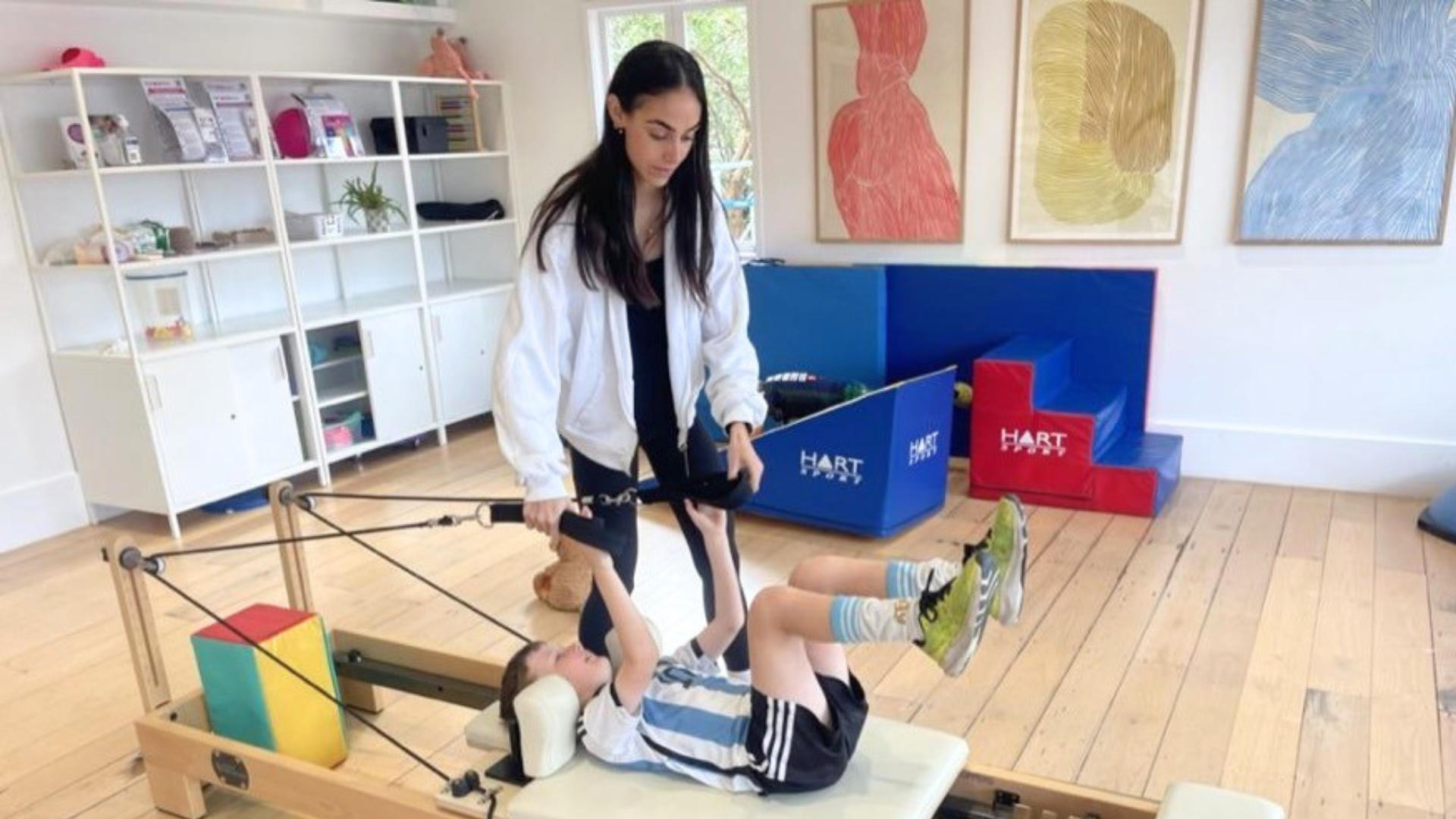
If you are ready to get started, or if you have been sitting on the fence wondering whether this is the right fit for your child, we would love to hear from you.We offer gross motor assessments, group programs, school holiday programs, and community sessions across Brisbane, Gold Coast, and regional Victoria, Queensland and South Australia. NDIS and private families welcome. No referral required. Get in touch via the link below, or comment SIGNS on our Instagram to receive our free guide: 5 Signs Your Child Might Benefit From Movement Therapy.
https://www.kidsheartpilates.com.au/contact
